Short answer: repair your roof when the damage is localized and the structure underneath is healthy; replace it when the roof is near the end of its lifespan, when problems keep coming back in different places, or when the underlayment has failed across large areas. The rest of this guide explains how to tell the difference before you commit to either.
When a Roof Repair Is the Right Call
Most roofs that leak do not need to be replaced. If the roof is well within the typical life of its material and the problem can be traced to one spot, a repair fixes it for a fraction of the cost and disruption.
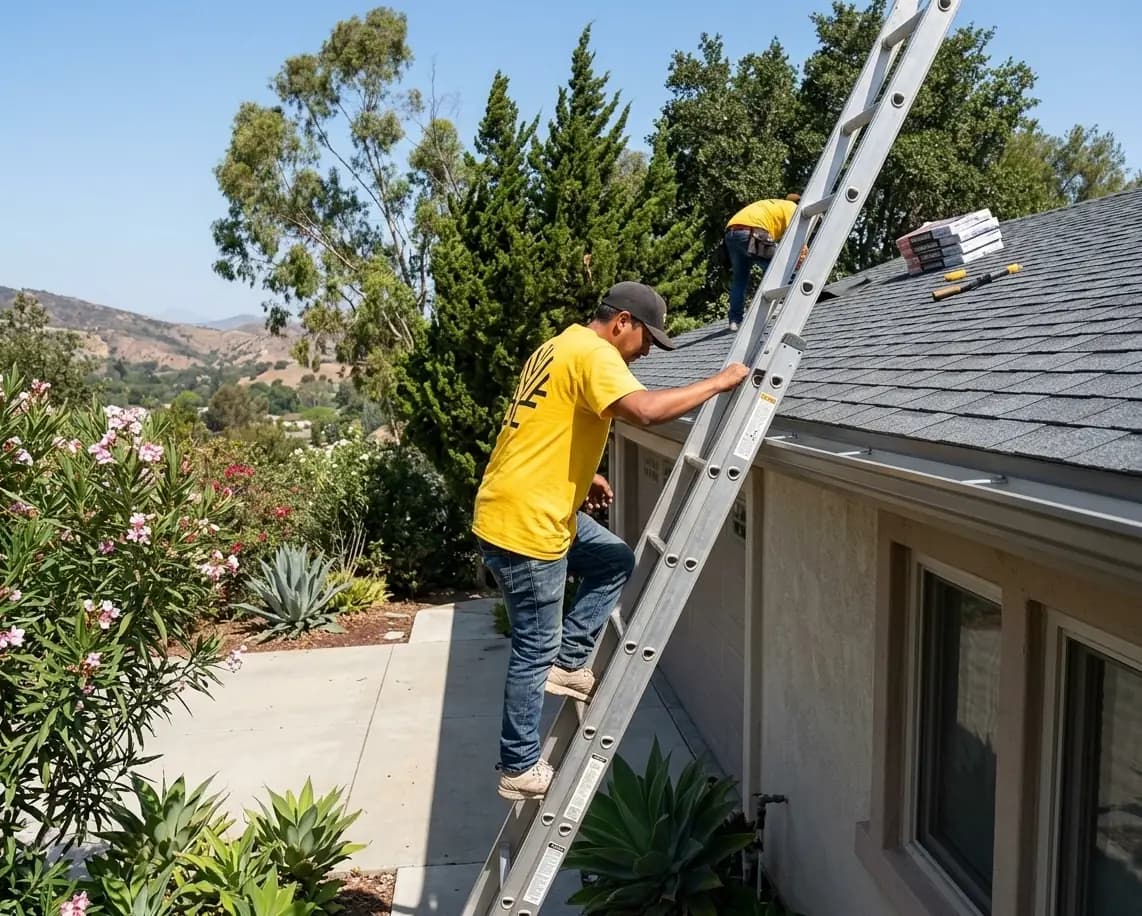
- A handful of cracked or slipped tiles, or a few lifted or missing shingles after a wind event.
- A leak that traces to flashing around a chimney, skylight, vent pipe, or a wall intersection.
- Storm or debris damage limited to one slope or one section of the roof.
- Ponding on a small area of a flat roof caused by a clogged drain or a single low spot.
- The decking is dry and solid when checked from the attic, with no sagging or daylight.
When Replacement Is the Better Investment
Replacement becomes the better decision when repairs stop solving the problem, or when a repair would only buy a year or two before the next one. Paying for three repairs in three years is usually more expensive than one replacement done right.
- The roof is at or past the typical lifespan for its material and leaks are appearing in more than one place.
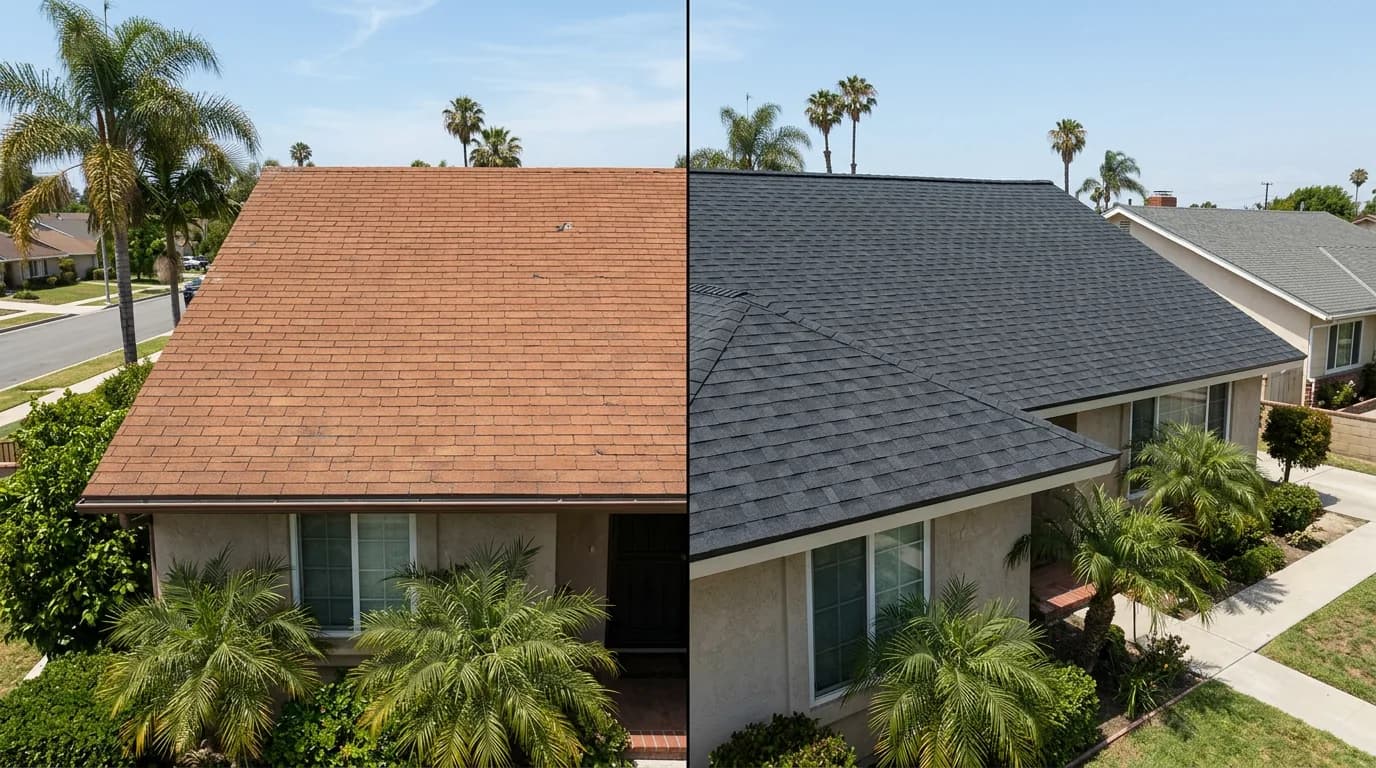
- The underlayment has dried out, cracked, or torn across large sections, even if the tiles or shingles on top look acceptable.
- There are already two layers of roofing; California code does not allow a third, so the next fix is a tear-off.
- Granule loss, curling, or brittleness across most of an asphalt shingle roof.
- Soft or sagging decking, rotted rafter tails, or repeated moisture staining inside the house.
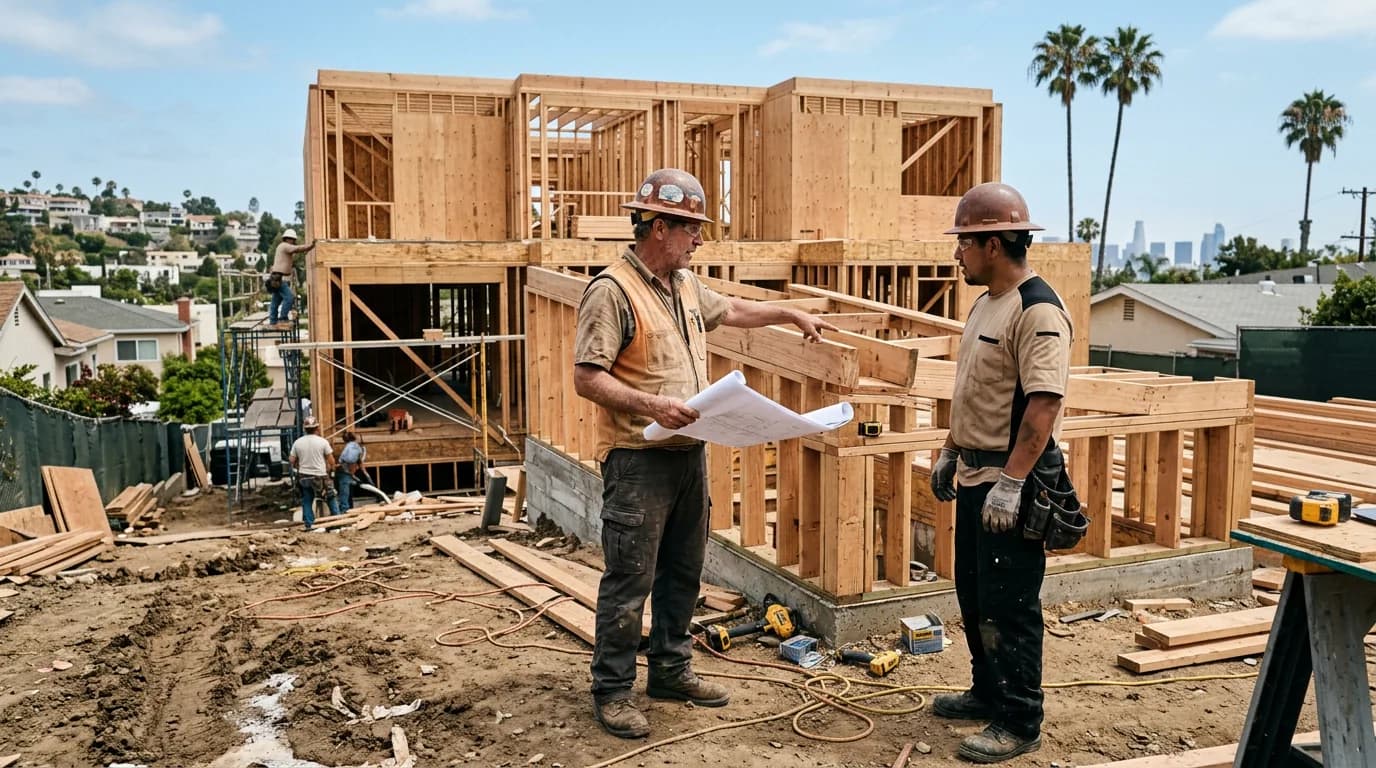
- You are planning a second-story addition, solar, or a major remodel and the roof will be disturbed anyway.
| What you see | Points to repair | Points to replacement |
|---|---|---|
| Extent of damage | One area: a few tiles, shingles, or one flashing | Several areas, a whole slope, or the entire roof |
| Age vs. material lifespan | Well within the typical life of the material | At or past the typical lifespan |
| Underlayment | Intact and flexible | Dried out, cracked, or torn in sections |
| Decking (from the attic) | Solid, dry, no daylight | Soft spots, sagging, moisture stains |
| Existing layers | One layer | Two layers already (a third is not allowed) |
| Leak history | First occurrence, one location | Recurring, showing up in new places |
| Best move | Targeted repair | Tear-off and full replacement |
How Long Roofs Typically Last in Los Angeles
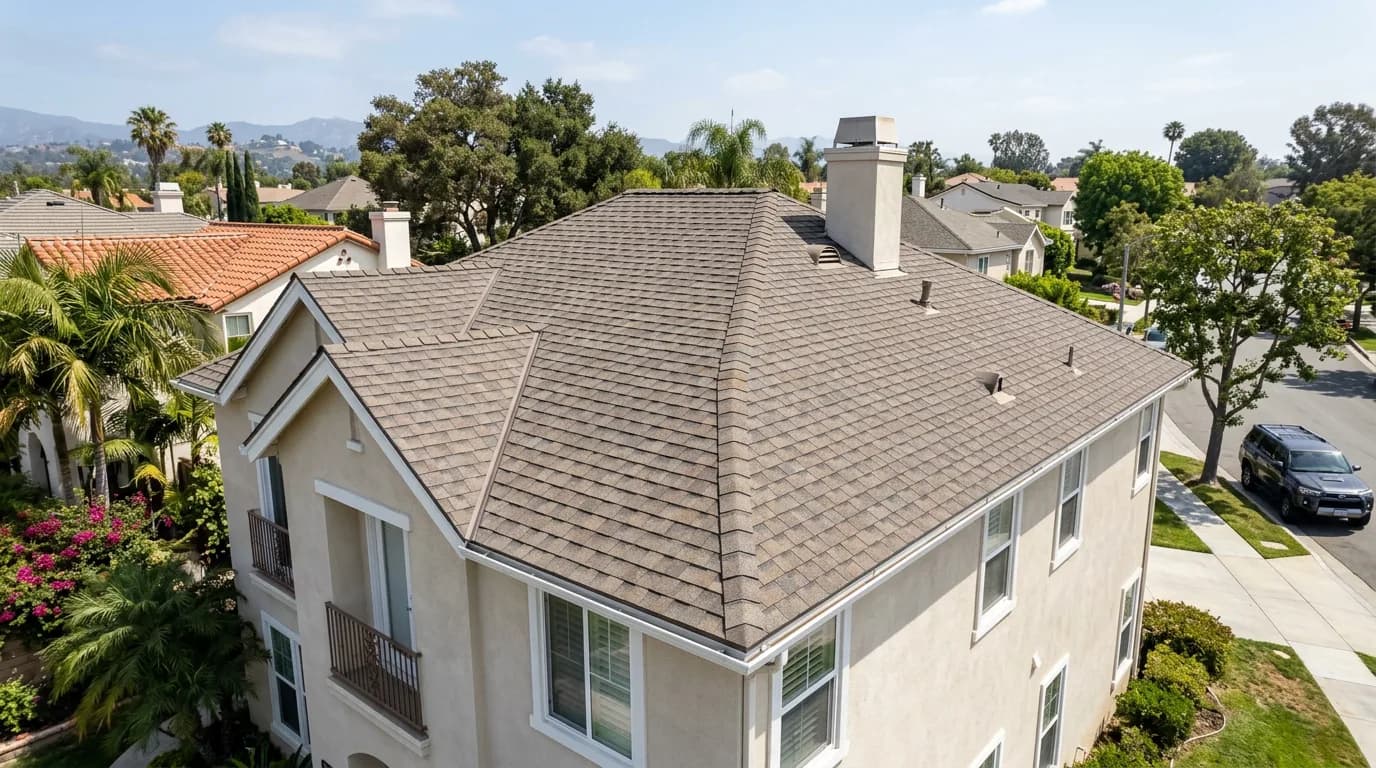
Material sets the baseline. Industry-typical lifespans are roughly 20 to 30 years for architectural asphalt shingle, 40 to 70 years for standing seam metal, and 50 years or more for concrete or clay tile. The catch in Southern California is that the underlayment beneath tile roofs, the waterproof layer that actually keeps water out, often fails in 20 to 30 years while the tile itself is fine. That is why a tile roof can look perfect from the street and still leak. We confirm the real condition of your roof during the inspection rather than assuming from age alone.
Signs That Point to Replacement in Los Angeles Homes
- Leaks that move: fixed in one place, reappearing in another the next rainy season.
- Brittle underlayment visible at the eaves or under a lifted tile.
- Heat damage: shingles that crack when flexed, or tiles that have shifted because the battens underneath have dried and split.
- Attic temperatures that are noticeably higher than they used to be, a sign the ventilation and roof system are no longer working together.
- Nails backing out across the field of the roof, not just in one area.
What a Proper Roof Inspection Covers
A price given from the driveway is a guess. A proper inspection walks the roof, opens the attic, and documents what it finds so you can see the evidence yourself. At minimum it should cover:
- Decking: soft spots, rot, and previous patches, checked from above and from the attic.
- Underlayment: condition at the eaves, valleys, and under a sample of tiles or shingles.
- Flashing: chimneys, skylights, vents, and wall-to-roof transitions, which cause a large share of leaks.
- Ventilation: intake and exhaust, because a roof that cannot breathe ages faster.
- Drainage: gutters, valleys, and flat-roof drains.
- Photos of every finding, so the estimate maps to something you can see.
Repair Now, Replace Later: Sequencing the Decision
Sometimes the honest answer is both. If a roof has two or three years left but has an active leak today, a targeted repair to stop the water is the right first step, followed by a planned replacement on your schedule rather than in an emergency during a January storm. A contractor who is confident in their work should be willing to say which situation you are in and put it in writing.
What to Expect During a Roof Replacement
If the answer is replacement, the process is more predictable than most homeowners expect. It runs in a fixed order, and knowing the order helps you plan around it.
- Inspection and written estimate, with photos of what was found.
- Material selection and permit. Re-roofing in the City of Los Angeles requires a permit, which we pull in our name.
- Tear-off down to the deck, with landscaping and walkways protected.
- Deck repairs, then dry-in: new underlayment, valley metal, and flashing, so the house is watertight before the finish material goes on.
- Installation of the tile, shingle, or metal to the manufacturer's specification.
- Final inspection, city sign-off, magnetic nail sweep, and handover of warranty documents.
Most single-family roof replacements are measured in days rather than weeks. The exact schedule depends on roof size, pitch, material, and weather, and we confirm it in writing before work starts.
What Determines the Cost Either Way
For a repair, the cost drivers are access, how much material has to be removed to reach the problem, and whether decking or flashing needs to be rebuilt. For a replacement, they are roof size and pitch, the material you choose, the condition of the decking uncovered during tear-off, ventilation and flashing details, and permit requirements. We do not quote from a formula; every roof gets a written estimate after the inspection, and financing is available if you would rather spread the cost.
How Wild Oak Approaches the Decision
Wild Oak Construction holds both a C-39 Roofing license and a Class B General Building license (CSLB #1146494). That matters for exactly this decision: if the inspection finds rotted decking, damaged rafters, or a ventilation problem, the same licensed team handles the structural work without bringing in a second contractor. We inspect first, photograph what we find, and tell you plainly whether a repair or a replacement is the better use of your money. Inspections and estimates are free for homeowners within about 20 miles of our Sherman Oaks office.