Short answer: a small roof leak is worth fixing right away, because the water you see is usually the smallest part of the problem. By the time a stain shows up on the ceiling, water has often been running along the decking, rafters and insulation for weeks. Caught early, most leaks are a straightforward repair. Left alone, the same leak can lead to wood rot, mold and structural damage that costs far more to fix.
Why a Small Leak Is Rarely Small
Water does not drip straight down from the spot where it gets in. It runs along the underlayment, the roof deck and the framing until it finds a low point, and only then shows up inside. That means the stain on your ceiling may be several feet away from the real entry point, and everything in between has been getting wet.
Wood that stays damp does not dry out between storms the way a wet surface outdoors does. Inside an attic or roof assembly, moisture lingers, and repeated wetting is what turns sound wood into rot.
What Ongoing Moisture Does to Your Home
- Wood rot: the roof decking, rafters and fascia soften and lose strength, so a repair that once needed a few shingles now needs new sheathing or framing.
- Termite-friendly conditions: damp, softened wood is exactly what wood-destroying insects look for, and the damage often goes unnoticed until it is advanced.
- Mold and mildew: wet insulation and framing in a closed attic are an ideal place for mold to grow.
- Insulation damage: soaked insulation compresses and stops insulating, which shows up on your energy bills.
- Interior damage: drywall, paint, flooring and electrical fixtures below the leak are all at risk once water reaches the living space.
None of this happens overnight, which is why small leaks are easy to put off. But each rainy season a leak stays open, the repair grows. This is the main reason we recommend dealing with a leak as soon as you notice it, not after the next storm.
Early Signs of a Roof Leak
- Brown or yellow stains on ceilings or high on walls, even small ones.
- Peeling paint or bubbling drywall near the ceiling.
- A musty smell in an upstairs room, closet or the attic.
- Daylight visible through the roof boards from inside the attic.
- Damp or darkened wood, or wet insulation, in the attic after rain.
- Missing, cracked or slipped tiles, lifted or curling shingles, or granules collecting in the gutters.
- Water stains around skylights, chimneys, vents or where a lower roof meets a wall.
Where Roof Leaks Usually Start
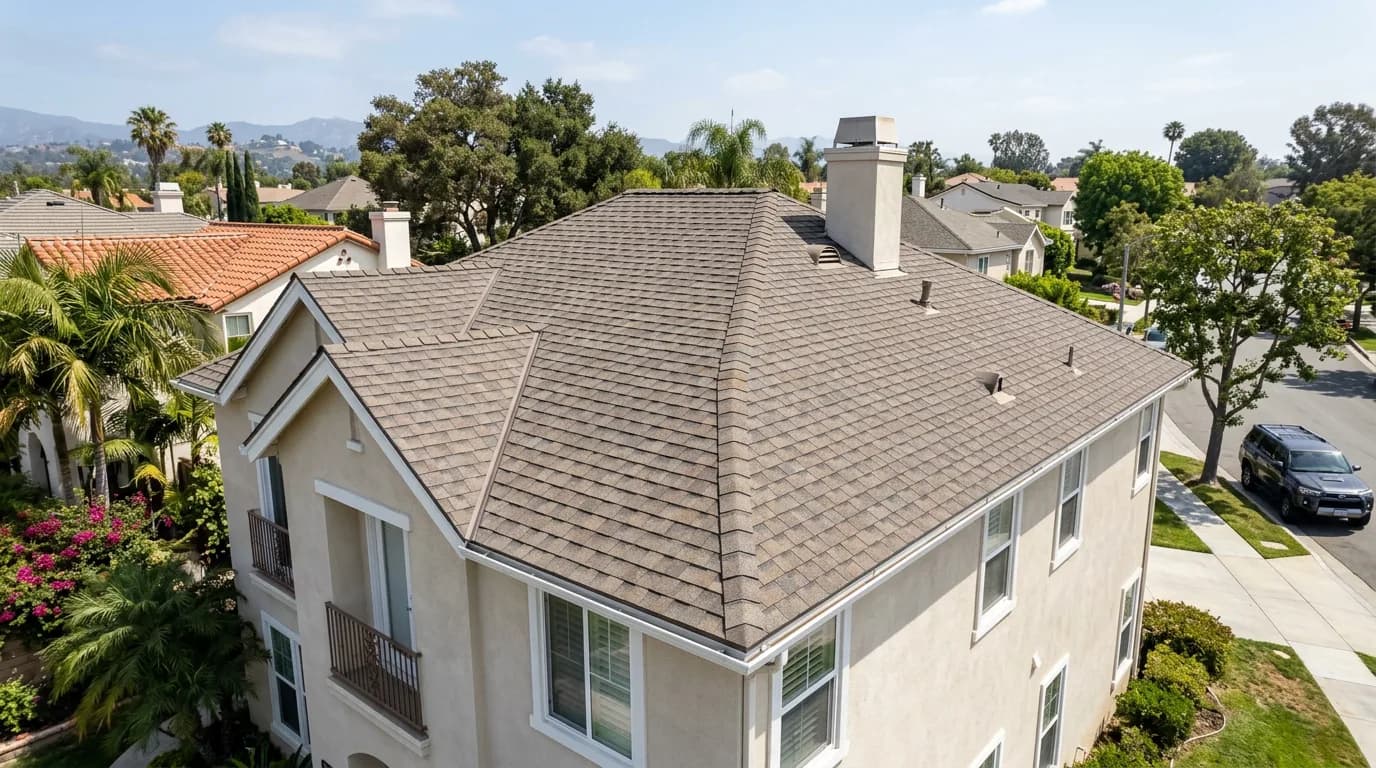
Most leaks do not come through the middle of an intact roof. They start where the roof is interrupted or where materials have worn out: flashing around chimneys, skylights and walls; pipe and vent penetrations; valleys where two roof planes meet; cracked or displaced tiles; lifted shingles; and underlayment that has broken down under years of Southern California sun. On tile roofs in particular, the tiles can look fine while the underlayment beneath them has failed.
Fix the Source, Not the Symptom
A common quick fix is to put sealant over the spot that looks suspicious, or to repaint the ceiling stain. That can hide the problem while water keeps getting in. A proper leak repair traces the water back to its entry point, checks the decking and framing around it for rot, and repairs the cause, whether that is flashing, a penetration, broken tiles or worn underlayment. Our approach is the same on every call: find the source and fix it before the damage spreads. See how we handle roof leak repair.
What to Do Right Now If Your Roof Is Leaking
- Move furniture and electronics away from the leak and put a bucket or towels underneath.
- If the ceiling is bulging with water, keep people clear of that area and call for help; do not stand under it.
- Take photos of the stain, the area below it, and anything that got wet. They help with the repair and with insurance.
- Stay off the roof, especially when it is wet. Tile and steep roofs are dangerous to walk on.
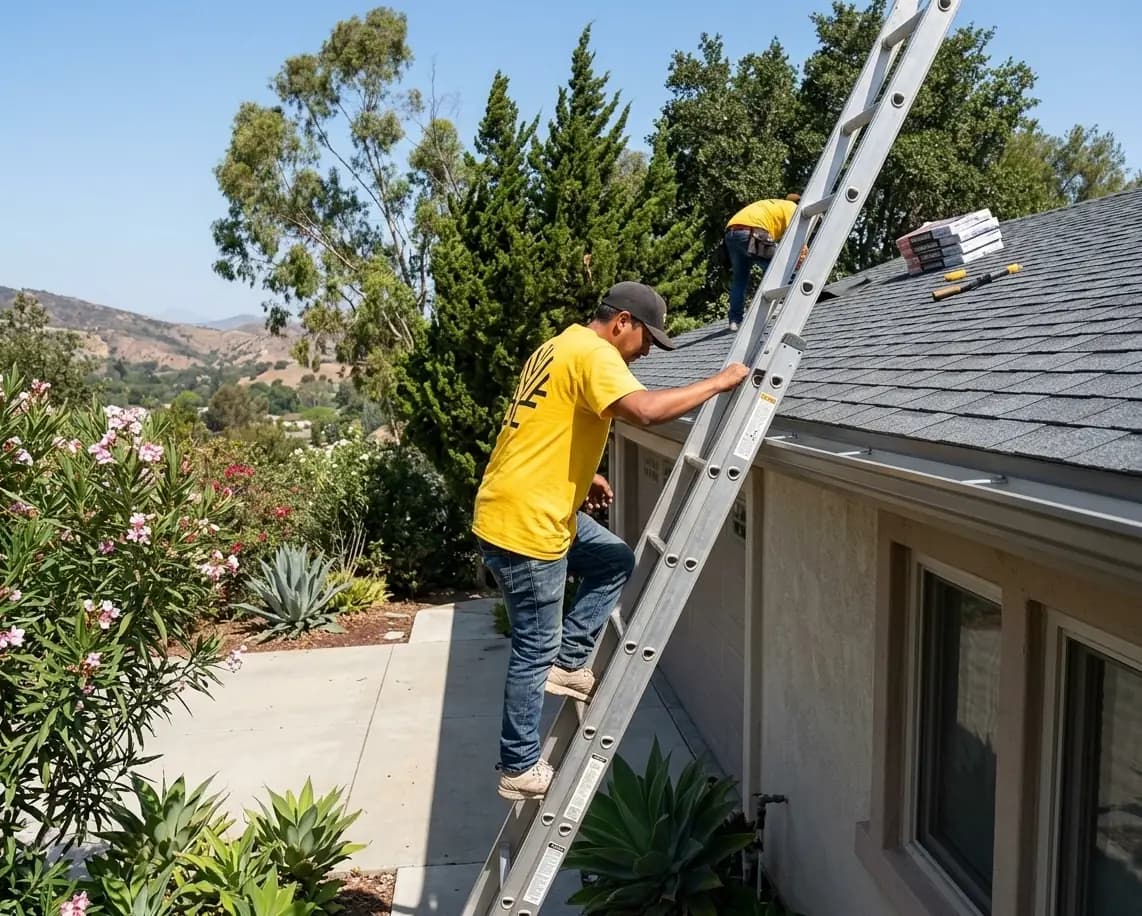
- Call a licensed roofing contractor. For an active leak, ask for an emergency visit.
Why Timing Matters in Los Angeles
Los Angeles gets most of its rain in a few months of the year, so a leak can stay hidden through the long dry season and then show up all at once with the first storms. The dry months are the best time to have a roof checked and small problems fixed, before the rainy season and before roofers' schedules fill up. If you already see a stain, do not wait for the next rain to confirm it. Learn more about when to replace your roof in Los Angeles and how to decide between repair and replacement.
Wild Oak Construction started as a roofing company and holds a C-39 Roofing license and a Class B General Building license (CSLB #1146494), so if a leak has already damaged the decking or framing, the same team can repair the structure and the roof. We work on shingle, tile, metal and low-slope roofs within about 20 miles of our Sherman Oaks office. For an active leak, call 818-755-5577; we prioritize active leaks and typically get a roofer out the same or next day. Otherwise, request a free roof estimate.